%201.png)


Mental Health & Somatic Therapies
Body-Centered Healing
HIR Wellness Institute offers Somatic Therapy—an integrative, body-centered approach to healing that recognizes how trauma and stress are stored not only in the mind but also within the body. Somatic therapy helps individuals reconnect with their physical and emotional selves, releasing tension, restoring regulation, and rebuilding a sense of safety and balance.


The Power of Sound
Healing unspoken hurts
Play is one of the brain’s most natural and powerful ways to heal. In art therapy, play activates creativity, curiosity, and connection—helping the brain safely explore and process emotions that can be difficult to express with words. From a brain-based perspective, playful and creative expression engages multiple regions of the brain at once—stimulating the areas responsible for emotional regulation, problem-solving, and connection. This helps calm the nervous system, reduce stress, and strengthen the pathways that support resilience and well-being. Through painting, drawing, movement, or imaginative play, participants can reconnect with a sense of joy and self-discovery. Play in art therapy fosters not only healing, but also deeper connection—to oneself, to others, and to the world.
These sessions provide a safe, creative, and supportive space for exploration, self-expression, and connection, fostering curiosity, emotional growth, and overall well-being.
By integrating somatosensory, play, expressive arts, and spatial awareness survivors are able to process difficult emotions that may be challenging to articulate through words alone. For individuals who have experienced trauma, art offers a non-verbal outlet for expressing complex feelings, helping to bridge the gap between the emotional and physical aspects of healing.

The Healing Power of Emotion Freedom Technique (EFT)
Healing unspoken hurts
Play is one of the brain’s most natural and powerful ways to heal. In art therapy, play activates creativity, curiosity, and connection—helping the brain safely explore and process emotions that can be difficult to express with words. From a brain-based perspective, playful and creative expression engages multiple regions of the brain at once—stimulating the areas responsible for emotional regulation, problem-solving, and connection. This helps calm the nervous system, reduce stress, and strengthen the pathways that support resilience and well-being. Through painting, drawing, movement, or imaginative play, participants can reconnect with a sense of joy and self-discovery. Play in art therapy fosters not only healing, but also deeper connection—to oneself, to others, and to the world.
These sessions provide a safe, creative, and supportive space for exploration, self-expression, and connection, fostering curiosity, emotional growth, and overall well-being.
By integrating somatosensory, play, expressive arts, and spatial awareness survivors are able to process difficult emotions that may be challenging to articulate through words alone. For individuals who have experienced trauma, art offers a non-verbal outlet for expressing complex feelings, helping to bridge the gap between the emotional and physical aspects of healing.
The Power of Play
Healing unspoken hurts
Play is one of the brain’s most natural and powerful ways to heal. In art therapy, play activates creativity, curiosity, and connection—helping the brain safely explore and process emotions that can be difficult to express with words. From a brain-based perspective, playful and creative expression engages multiple regions of the brain at once—stimulating the areas responsible for emotional regulation, problem-solving, and connection. This helps calm the nervous system, reduce stress, and strengthen the pathways that support resilience and well-being. Through painting, drawing, movement, or imaginative play, participants can reconnect with a sense of joy and self-discovery. Play in art therapy fosters not only healing, but also deeper connection—to oneself, to others, and to the world.
These sessions provide a safe, creative, and supportive space for exploration, self-expression, and connection, fostering curiosity, emotional growth, and overall well-being.


The Power of Cultural Practices
Healing unspoken hurts
Play is one of the brain’s most natural and powerful ways to heal. In art therapy, play activates creativity, curiosity, and connection—helping the brain safely explore and process emotions that can be difficult to express with words. From a brain-based perspective, playful and creative expression engages multiple regions of the brain at once—stimulating the areas responsible for emotional regulation, problem-solving, and connection. This helps calm the nervous system, reduce stress, and strengthen the pathways that support resilience and well-being. Through painting, drawing, movement, or imaginative play, participants can reconnect with a sense of joy and self-discovery. Play in art therapy fosters not only healing, but also deeper connection—to oneself, to others, and to the world.
These sessions provide a safe, creative, and supportive space for exploration, self-expression, and connection, fostering curiosity, emotional growth, and overall well-being.

The Healing Power of Energy Work
Healing unspoken hurts
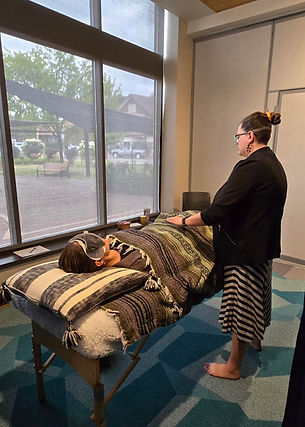
Play is one of the brain’s most natural and powerful ways to heal. In art therapy, play activates creativity, curiosity, and connection—helping the brain safely explore and process emotions that can be difficult to express with words. From a brain-based perspective, playful and creative expression engages multiple regions of the brain at once—stimulating the areas responsible for emotional regulation, problem-solving, and connection. This helps calm the nervous system, reduce stress, and strengthen the pathways that support resilience and well-being. Through painting, drawing, movement, or imaginative play, participants can reconnect with a sense of joy and self-discovery. Play in art therapy fosters not only healing, but also deeper connection—to oneself, to others, and to the world.
These sessions provide a safe, creative, and supportive space for exploration, self-expression, and connection, fostering curiosity, emotional growth, and overall well-being.
By integrating somatosensory, play, expressive arts, and spatial awareness survivors are able to process difficult emotions that may be challenging to articulate through words alone. For individuals who have experienced trauma, art offers a non-verbal outlet for expressing complex feelings, helping to bridge the gap between the emotional and physical aspects of healing.

The Healing Power of Sport
Healing unspoken hurts
Play is one of the brain’s most natural and powerful ways to heal. In art therapy, play activates creativity, curiosity, and connection—helping the brain safely explore and process emotions that can be difficult to express with words. From a brain-based perspective, playful and creative expression engages multiple regions of the brain at once—stimulating the areas responsible for emotional regulation, problem-solving, and connection. This helps calm the nervous system, reduce stress, and strengthen the pathways that support resilience and well-being. Through painting, drawing, movement, or imaginative play, participants can reconnect with a sense of joy and self-discovery. Play in art therapy fosters not only healing, but also deeper connection—to oneself, to others, and to the world.
These sessions provide a safe, creative, and supportive space for exploration, self-expression, and connection, fostering curiosity, emotional growth, and overall well-being.
By integrating somatosensory, play, expressive arts, and spatial awareness survivors are able to process difficult emotions that may be challenging to articulate through words alone. For individuals who have experienced trauma, art offers a non-verbal outlet for expressing complex feelings, helping to bridge the gap between the emotional and physical aspects of healing.

The Healing Power of Music
Healing unspoken hurts
Play is one of the brain’s most natural and powerful ways to heal. In art therapy, play activates creativity, curiosity, and connection—helping the brain safely explore and process emotions that can be difficult to express with words. From a brain-based perspective, playful and creative expression engages multiple regions of the brain at once—stimulating the areas responsible for emotional regulation, problem-solving, and connection. This helps calm the nervous system, reduce stress, and strengthen the pathways that support resilience and well-being. Through painting, drawing, movement, or imaginative play, participants can reconnect with a sense of joy and self-discovery. Play in art therapy fosters not only healing, but also deeper connection—to oneself, to others, and to the world.
These sessions provide a safe, creative, and supportive space for exploration, self-expression, and connection, fostering curiosity, emotional growth, and overall well-being.
By integrating somatosensory, play, expressive arts, and spatial awareness survivors are able to process difficult emotions that may be challenging to articulate through words alone. For individuals who have experienced trauma, art offers a non-verbal outlet for expressing complex feelings, helping to bridge the gap between the emotional and physical aspects of healing.